|
|
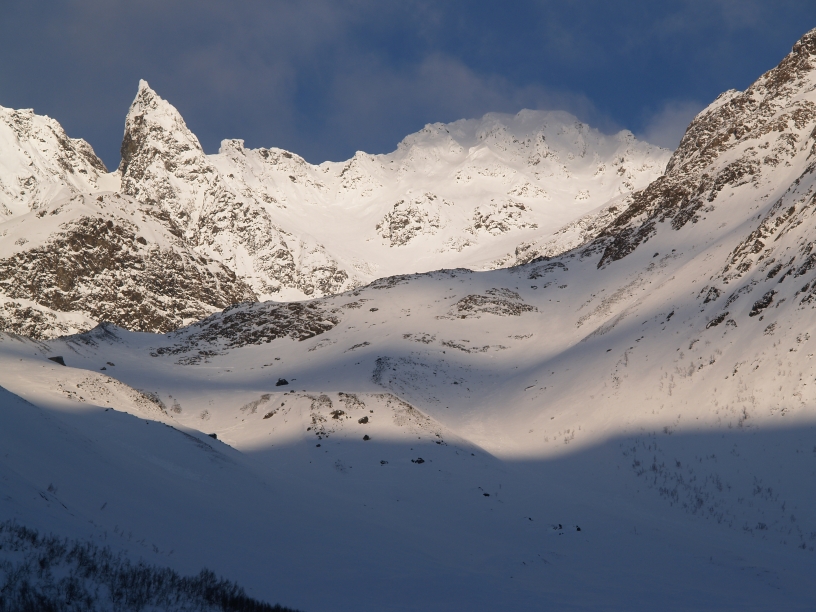
| Istinden was first
climbed by William Cecil Slingsby and Geoffrey Hastings (UK) on July
13th
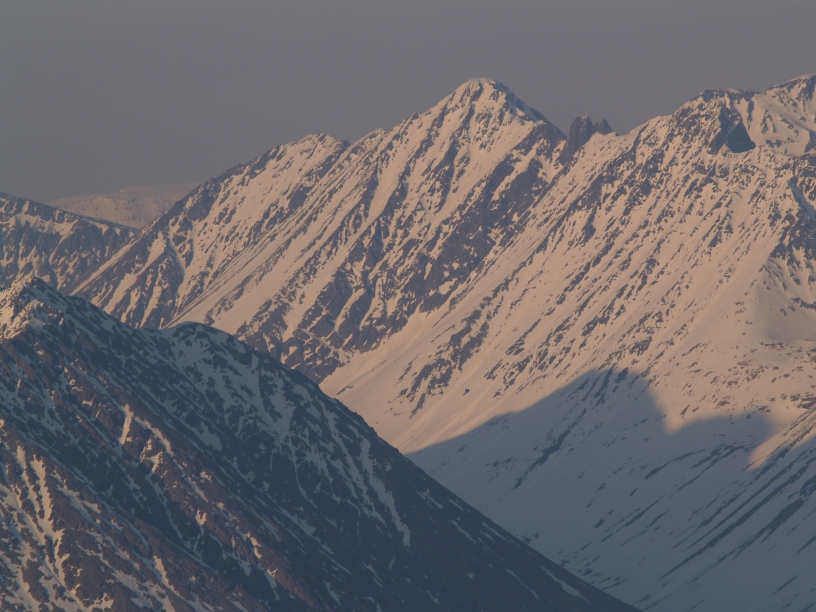
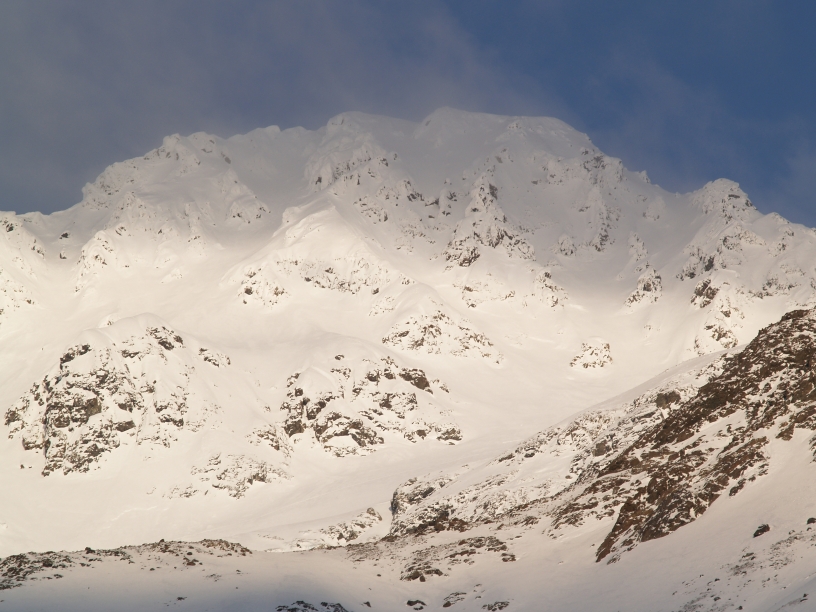
1898. Slingsby and Hastings started from Jægervatnet and walked up Stortinddalen/Gárjelvággi towards Tyttebærdalen. They reached the summit via the North buttress. "In 1897, Hastings had seen the Kjostind (actually Istinden) from several places and rightly concluded that it was the most suitable mountain for us to begin with, as, from its summit, a most comprehensive view of the mountains both north and south of the Kjosfjord could be obtained. This we proved to be the case, but the principal feature of the ascent of this really fine peak was our entire corroboration of the truth of the twentieth proposition of the first book of Euclid, which we worked out most patiently, most stubbornly, and most painfully, and we proved after 3 ½ hours of hard plodding, to which a twelve-year-old schoolboy is a stranger, that the two sides of the triangle which we traversed to the base of our peak, and which cost us 19 ½ hours to accomplish, were greater than the one side which we followed with weary footsteps on our return, but which, nevertheless, only absorbed 5 hours . The classically-minded member of our party apparently considered the working out of this problem to be beneath his notice; certain it is that he turned back to camp when we had reached the end of the first side. When climbing up the crags a few hundred feet below the summit of Kjostind Hastings paid me the one compliment with which he has ever honoured me, and I am yery proud of it. It was in the good Yorkshire dialect in which we sons of the North are so fond of indulging when out on the fells, and was merely “Thar´t a toff un.” The summit of Kjostind (5,680 ft.) is a beautiful snow dome, and the views were exquisite. While Hastings photographed, I carefully studied the northern mountains, and was able to solve one or two orographical puzzles. Our return was enjoyable despite our fatigues. We had a magnificent glissade down a long snow gully; we discovered four hitherto unknown lakes, two of which are formed by huge ancient terminal moraines. All of these drain into the Stortinddal. We passed hundreds of reindeer, and had a most romantic walk past the lakes into the big valley. and 34 ½ hours after leaving camp were welcomed back by Haskett-Smith." William C. Slingsby: Mountaineering In Arctic Norway, Alpine Journal 1899. The second ascent was made just one week later - on July 20th 1898 - by Elizabeth Main (a.k.a. Mrs. Aubrey Le Blond) (UK) and the Swiss guides Josef and Emil Imboden. They also made a possible second ascent of Store Kjostinden on the same day: "Having descended to the saddle, we looked about for the best route up the other peak, the Kjostind (actually Istinden). We first thought of ascending by the ridge from the saddle, but eventually decided that a better and quicker way was to cross the glacier, gain the rock ridge beyond, turn sharp to the left at the top, and follow it to the summit of the peak. This plan succeeded admirably, and the first few feet of the rocky wall furnished some very pretty scrambling. At 3.30 P.M. we reached the first of the series of stone sentinels, which Mr Slingsby's party had placed at intervals all round the wall of rock which supports the snow-cap. It led one to think that after a few hours on a mountain-top the member of the party who wields neither the camera nor the plane- table must be glad of some active employment. We were singularly favoured by the weather, and sat a long time on the summit, while Imboden devised safe and speedy routes up the scores of magnificent peaks which surrounded us. Here, a roky needle reminded us of the Aiguille du Dru. There a great rock-ribbed mountain, plastered with glacier, seemed another Barre des Ecrins. To the south, the huge snowy mass of the Yoeggevarre resembled Mont Blanc. But another feature was present, never seen in Alpine views. The Lake of Thun looks exquisitely lovely at early morning from the Jungfrau. But no lake can match the heavenly blue of the fjords as they stretch mile after mile, away amidst snow-crowned mountains, away to the distant, island-gemmed Arctic Ocean. Such a view as I saw from the Kjostind my eyes had never rested on before; it alone was worth a longer journey than I had made from England. It was a beautiful walk over calm, farstretching uplands back to Lyngseidet that evening, and at 8.30 we were down there once more." (Mrs. Aubrey Le Blond: Mountaineering In The Land of the Midnight Sun, 1908) |