|
|
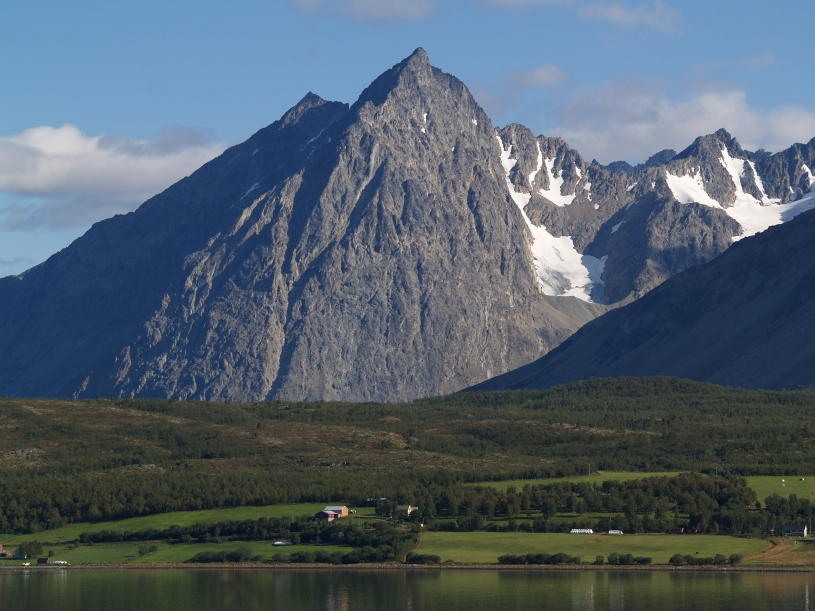
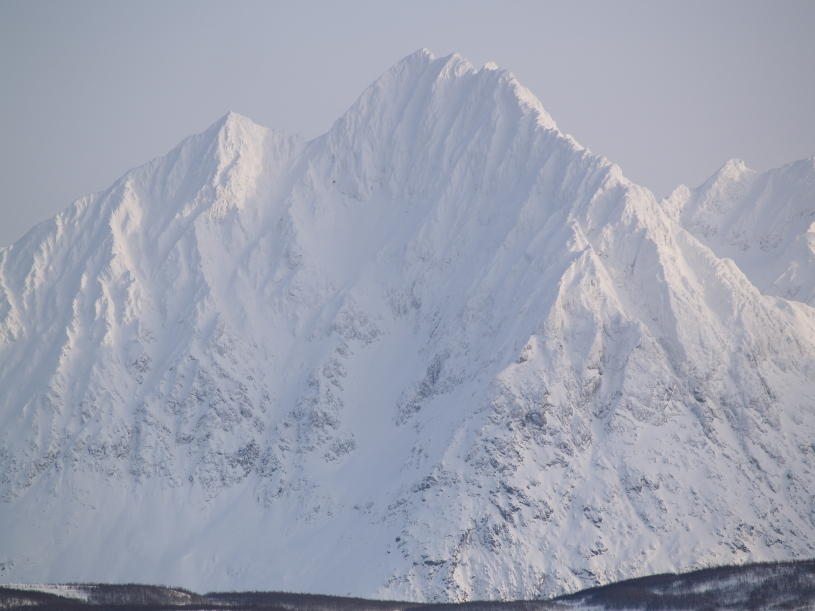
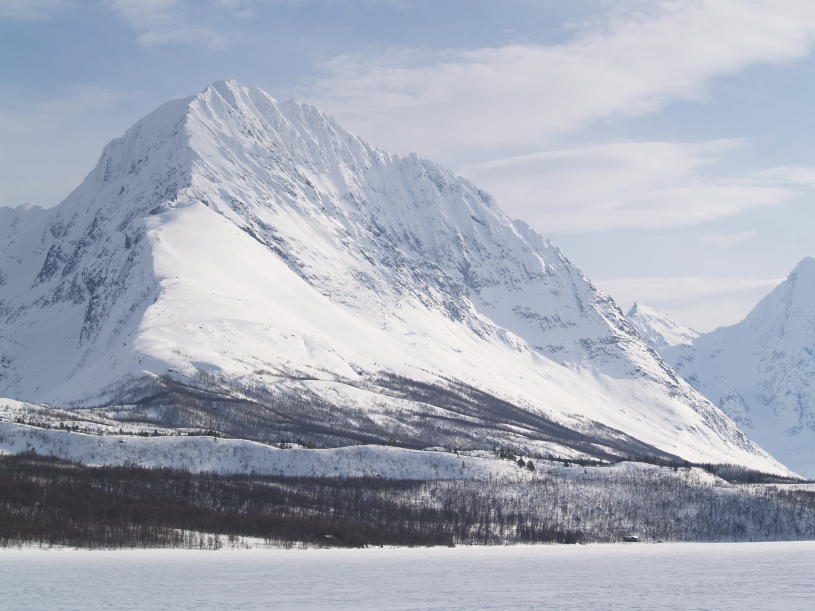
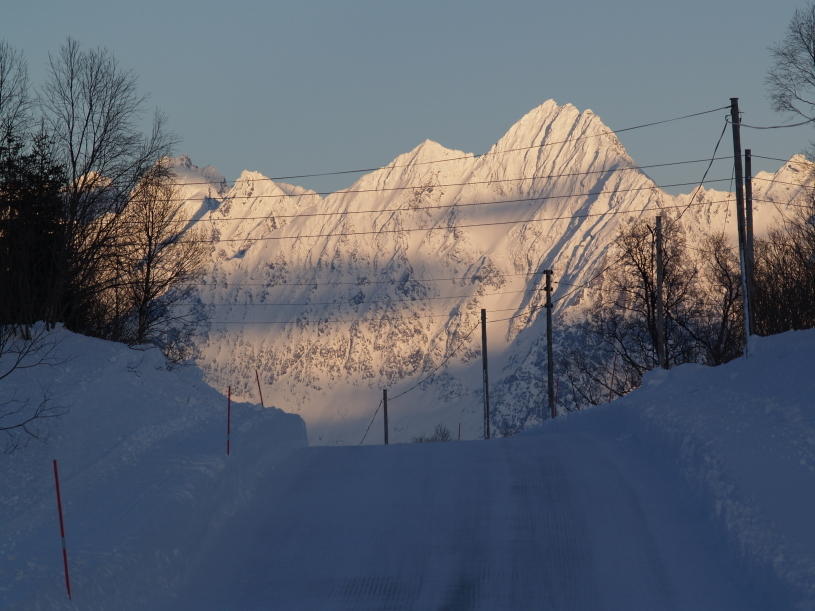
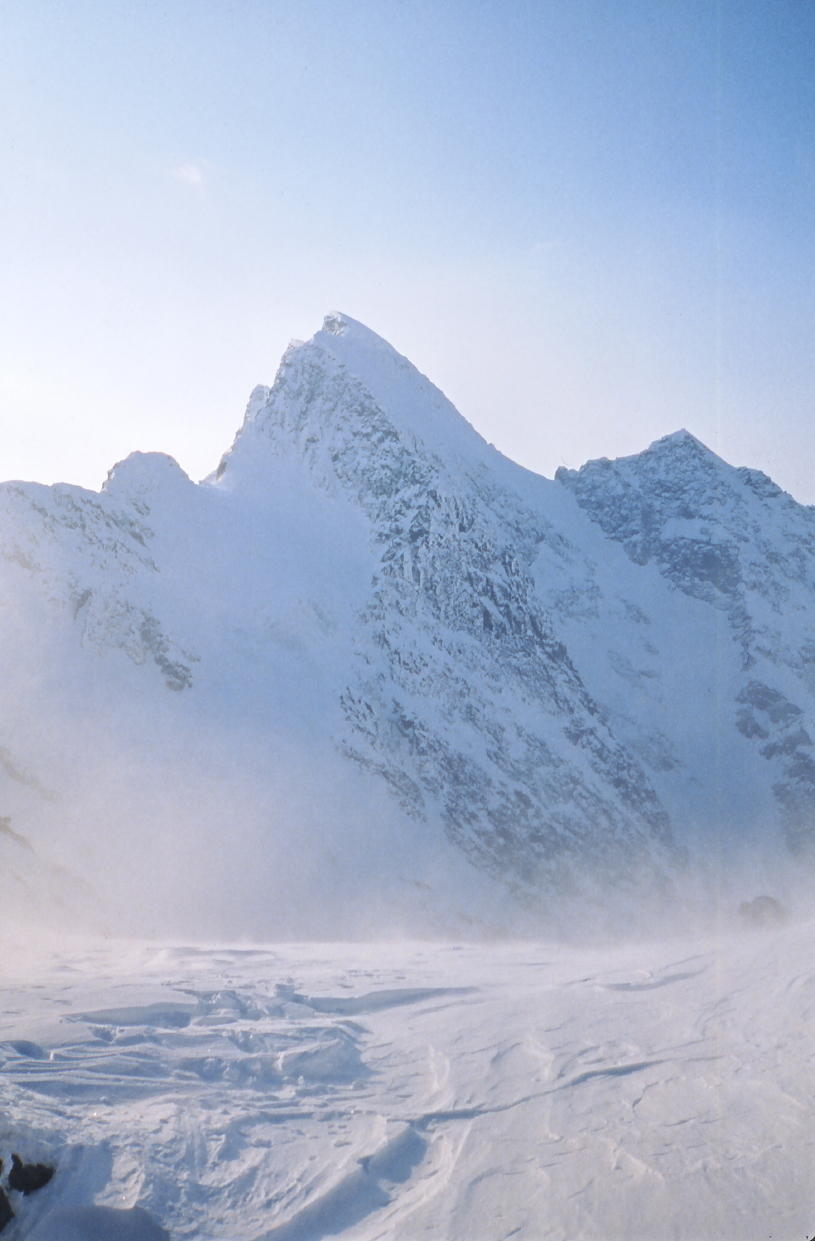
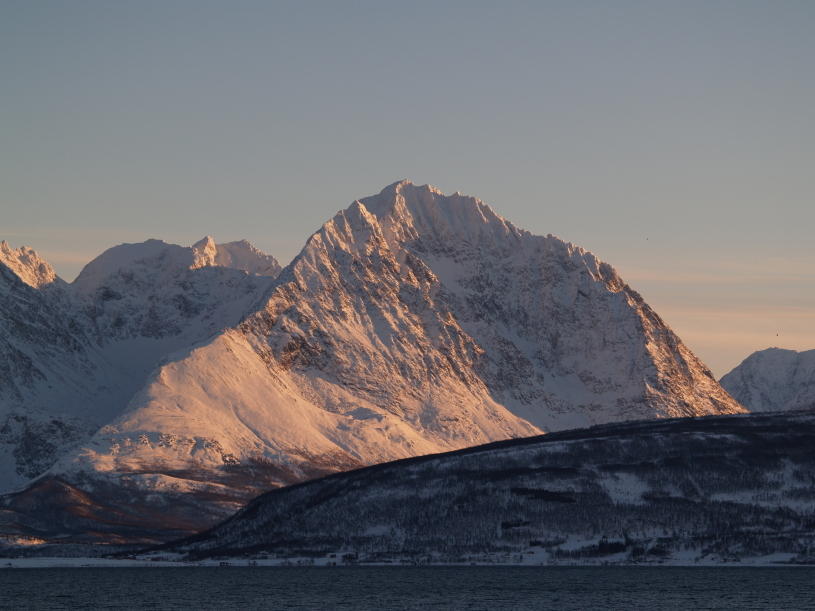
| Gárjilgáisi
was first climbed by Geoffrey
Hastings, William
C. Slingsby, Walter
Perry Haskett-Smith (UK), Elias Hogrenning and Josef Caspari (N) on
July 15th 1898. "During two days of lovely weather the Stortind had beckoned us to try our metal upon its grisly rocks, and at last the call was irresistible, and we felt forced to obey. Our way lay through a beautiful parklike birch grove, where the boles of many trees were nearly 2 ft. in diameter. We saw many reindeer, some quite close, but whether they were old or young, black, brown, or white, all looked as if the use of a curry-comb would have done them good. Above the woods we followed reindeer tracks on to a broad shoulder. Below us, on the eastern side, was a round tarn of turquoise blue, singularly like Le Lac Bleu at Arolla, and fed like it by a stream which, after emerging from a glacier, is for a long distance lost to daylight beneath a huge moraine. The rocks above are, I believe, of the same geological forma- tion in both cases. The shoulder came to an abrupt end abutting against the narrow N. ridge of Stortind. There was a gap and a wall beyond. No doubt the wall is sealeable; we did not test it, but turned down to the western face, where, for nearly 3 hrs., under my leadership, we tried in vain to traverse the face over to a broad gully which apparently would have taken us to the ridge again. We all climbed an exceedingly steep and nasty chimney, and Haskett- Smith shoved me up another beyond, whilst the others were perched on a sort of ‘tennis-court ledge.’ It was nearly feasible but not quite, so we had to return. The rocks, all firm and good, were singularly like the huge slabs on the N. face of Sea Fell. Two hundred feet lower down, a narrow stony gully led to the aréte. Hastings went up it, and as he reported favourably we all followed.From here we had as jolly a ridge climb as one could wish to see. It was never too easy, but never supremely difficult.It afforded much variety, the rock was always good in steep places, and the holds were excellent. We had narrow ledges over grim precipices, chimneys where a leg up and a broad shoulder helped the first man, who in turn performed the duties of a derrick. We reached a low peak, and here we tested the masonic powers of Hogrenning, who soon put up a respectable cairn. It was doubly delightful to me, as, in spite of the fact that I had gone wrong on the face, my companions unselfishly allowed me to lead up to the very top of the mountain. A short steep descent brought us to a gap. Here we were driven below large slahby rocks to the top of a steep snow- field on the eastern side. Our route was simple enough alongthe crest of a snow wave, which ultimately led us to a steep snow slope which terminated in ice below smoothly-polished rocks. Here I had to cut some good steps, the size of a Viking´s helmet, and great care and watchfulness were necessary. After the slabs of rock we entered a narrow and steep snow gully, from which a good winding rock staircase led us on to the final aréte and we came unexpectedly to the top, a perfect and spotless cone of snow. Our two Norsk companions acquitted themselves admirably. Hogrenning, accustomed to roches moutonnées from babydom, and to walks on the glacier a few hundred yards above his home from more advanced boyhood, proved to be a tower of strength. Caspari, who had never been on a fine mountain before, went most pluckily, and thoroughly enjoyed himself, thanks in great measure to Woolley’s boots, which he wore. I have never heard of Woolley’s heart and pluck disappearing into his boots, but I do believe that Caspari got some mysterious inspiration from the borrowed footgear. Un- luckily, a cloud curtain hid most of the view from us, but now and then through rifts we had most dramatic peeps of fine mountains E. The Stortind rises out of the Stortinddal with grand precipices, but it could be climbed from that side by ascending a little glacier to a col at the head of the Forholtbræ. Haskett- Smith, Caspari and I descended the snow dome towards the E. to see if we could circumvent a savage-looking crag and gain this col far below and then descend by the Forholtbræ. Our reconnaissance was most unsatisfactory, as we could see nothing but ghosts grinning through the gloom, so we harked back again to the summit. Our descent was very enjoyable. Hastings was last on the rope, and when one by one we crossed the smooth rock bosses and gained the snow below we felt that it was well to have a good man above. At the gap between the two peaks we looked down at our tents far below, and hesitated whether we should attempt to descend by the snows of the great central gully, but as there was one rather doubtful place we decided to leave it alone, though at a later date we clearly saw that it could have been negotiated. Caspari, with the boldness of a lion, pro- posed as an alternative a descent by the eastern face to the Forholtbræ, but as it would probably have involved the cutting of 5,000 steps, and the risk of starting an avalanche, we turned to our old course, and for a second time enjoyed the ridge climb. We reached camp in detachments, the first arriving at 12.45 A,M. Bed pulled very hard after this, and we did not get up till 1 P.M." William C. Slingsby: Mountaineering In Arctic Norway, Alpine Journal 1899. Elizabeth Main (a.k.a. Mrs. Aubrey Le Blond) and the Swiss guides Emil and Josef Imboden made the second ascent of the mountain on August 5th 1898. |